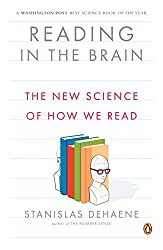
Rating: 7.8/10. Reading in the Brain: The New Science of How We Read by Stanislas Dehaene Book survey of the neuroscience of reading, written by a prominent researcher. Our brains did not evolve to read, yet we can learn to read by “recycling” parts of our visual system to recognize letters and words instead of objects….
Category: Natural Sciences
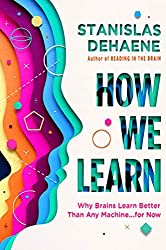
How We Learn by Stanislas Dehaene
Rating: 8.1/10. How We Learn: Why Brains Learn Better Than Any Machine… for Now by Stanislas Dehaene Book by neuroscience researcher about human learning. A lot of cognition is taken for granted until we try to train AI to do it, then it becomes apparent how difficult it actually is. AI still has a long…
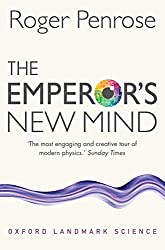
The Emperor’s New Mind by Roger Penrose
Rating: 7.7/10. Book by physicist and mathematician Roger Penrose that touches on a lot of disparate topics in artificial intelligence, computability theory, consciousness, and advanced quantum physics. This book reads like a guided tour for an intelligent but non-specialist audience. The overall thesis is not revealed until the last chapter, where all the different threads…
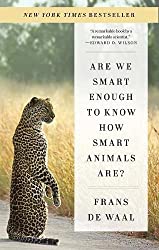
Are We Smart Enough to Know How Smart Animals Are? by Frans de Waal
Rating: 8.0/10. Book about animal cognition and methods to probe them. Recently, we are starting to learn that many animals are more intelligent than we thought, because the methodology to test their intelligence in the past was flawed. Instead of giving them artificial, one-size-fits-all tests, we should take into account each species’ individual “Umwelt” —…
The Infinite Gift by Charles Yang
Rating: 7.3/10. Book about child language acquisition by a Yale linguistics professor and researcher in the area. Each chapter talks about a different areas of linguistics (eg: phonology, morphology, syntax) and how children acquire it. There’s a lot that we don’t understand about the language acquisition process, but it seems to be very efficient and…
Annals of the Former World by John McPhee
Rating: 8.2/10. One of the longer books I’ve read, this is a 660-page book about geology. It is actually composed of five books that were separately published from 1981 to 1998. It won the 1999 Pulitzer Prize for non-fiction. The author has a narrative style that takes a while to get used to: at first…
The Machinery of Life by David S. Goodsell
Rating: 8.1/10. A fairly unique book that explains molecular biology using illustrations and detailed to-scale 3D renderings of molecules. Only about 150 pages but there’s an illustration on nearly every page, explaining many different cellular processes, such as: DNA transcription, cellular respiration, breakdown of an E. coli bacterium, viruses, drugs. Doesn’t go too deep into…
The Death and Life of the Great Lakes by Dan Egan
Rating: 8.0/10. The Great Lakes system contains about 20% of the world’s surface freshwater, but is “ecologically naive”: for thousands of years, its ecosystem has been isolated from the outside world as foreign fish can’t make it through the rapids and up Niagara Falls. This all changed in the 19th century as we opened several…
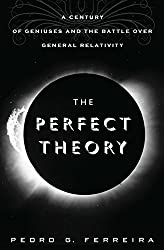
The Perfect Theory by Pedro G. Ferreira
Rating: 5.0/10. Book about Einstein’s theory of general relativity; I got bored after reading about 90 pages. Given that the author is a theoretical physics professor, I expected a more satisfying explanation of general relativity. Instead, this book is entirely about the history of general relativity, with descriptions of various scientists’ personalities. It overlaps substantially…
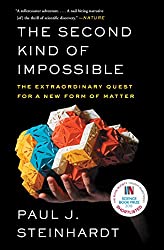
The Second Kind of Impossible by Paul Steinhardt
Rating: 8.5/10. A scientific adventure that starts out in theoretical physics but ends up in geology. The author is a physicist, who hypothesizes the existence of a new type of matter called a quasicrystal, which has no translational symmetry but only rotational symmetry, and is made up of atoms in a Penrose tiling. You can…
Eight Amazing Engineering Stories by Bill Hammack
Rating: 7.3/10. Short pieces about material science and engineering, picked it up when somebody recommended this book over the “Stuff Matters” book as a more technical tour of material science. The author is famous for the Engineering Guy YouTube channel. The book goes through a bunch of topics: digital cameras, smartphone accelerometers, atomic clocks, uranium…
Stuff Matters by Mark Miodownik
Rating: 5.5/10. Pop science book by a material science professor, where each chapter talks about some material, their properties, history, etc. The first chapter “indomitable” is about metals: they’re as hard as rock but much more malleable so they don’t break easily. Humans first figured out how to make copper by heating a rock, then…