Rating: 8.3/10.
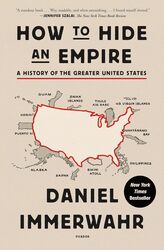
Book about America’s hidden empire, and how it came to be like this rather than older colonial empires (like the British or French) which conquered large areas of land and populations. The US is now more of a “pointillist” empire that controls specific points of interest around the world, but it’s no less effective. While commonly as just the mainland (and maybe Hawaii and Alaska), but many parts of the greater empire like the Philippines, Puerto Rico, Guam, and other overseas territories are often forgotten as part of US history. This book brings the history of the neglected territories into focus.
The book starts with Daniel Boone, who set off into the Appalachian Mountains to settle in Kentucky in 1776 but was met with government disapproval since Jefferson did not expect rapid expansion to the west but rather a slowly advancing frontier. However, the population doubled every 25 years or so and soon was exceeding that of England, and pioneers settled rapidly into new territories. As the white settlers expanded west, the Indians were driven further west to a designated “Indian country” until the 1840s, when the Indian country was opened up as well for settlers, and all the Indians of various groups were driven to a small part of Oklahoma. In the late 19th century, guano (bird droppings) on remote islands became a prized source of fertilizer, leading the US to claim various islands in the Pacific. This later became unnecessary with Haber’s invention of synthetic fertilizer.
In the 1890s, America defeated the Spanish in a series of battles under Teddy Roosevelt and gained control over several large islands, including the Philippines, Cuba, and Puerto Rico (arguably the victory was more the result of an ongoing revolt against Spanish rule, and America just dealt the final blow). Hawaii was annexed the same year, and the US might have taken even more of Latin America. But unlike previous expansions into mostly empty land, these territories were densely populated, leaving a question of what to do with the inhabitants. The decision was made not to consider them as US citizens and the government provided little attention or resources to these populations, even though they were formally American colonies; to this day, the populations of Puerto Rico and American Samoa are not full US citizens and do not have the right to vote.
In 1930s Puerto Rico, health was poor and the rural population was endemic with hookworm long after it was eradicated in the mainland due to lack of resources. Dr. Rhoads joked in letters about transplanting cancers into patients who he thought were an inferior race and testing chemotherapy methods on locals who didn’t know any better.
The next several chapters discuss American involvement in the Philippines. It started in 1899, where the US waged war following an outbreak of hostilities and tensions, and the military was victorious by 1902. However, what followed was a decade-long guerrilla conflict led by Aguinaldo until 1913, with huge humanitarian costs to the Filipino population. After the war, Americans built a government city in the mountains called Baguio, to the anger of Filipinos whose money was used. In the 1930s, America cared little about the Philippines and other colonies and was not prepared to defend them in a war, or accept their inhabitants as citizens. When the Philippines declared independence, America let them do so without much of a fight.
When World War II began, Alaska became militarily important, and natives were sent to internment camps; a road was built through Canada to help with logistics. Hawaii was placed under martial law, the locals enthusiastically complied and bought war bonds in large quantities and were some of the bravest soldiers, even despite them being marginalized on the mainland. Japan invaded the Philippines in 1941 soon after Pearl Harbor and were initially met with little resistance there and in Guam and the Aleutian Islands. However, General MacArthur led a successful Pacific naval campaign, fighting back in battles such as the Battle of Manila, one of the bloodiest city battles in the war, where citizens had nowhere to flee. Even then, a paradox was that the Filipino locals considered themselves an American colony, but practically everyone in America considered them a foreign nation.
Part 2 of the book focuses on how America’s concept of colonialism evolved after World War 2. At this time, it was clear that the value of controlling a lot of small islands and the importance of vast, global, and efficient logistics had helped America win the war. The U.S. initially occupied territories throughout the world with a larger population than the mainland, but quickly in the years after the war, they gave up on holding its overseas colonies for multiple factors. First, the soldiers wanted to return home, and second, there was a generally strong global anti-imperialist sentiment. The main exceptions were Alaska and Hawaii, which gained statehood in 1959, and non-white governors were allowed in the Senate for the first time.
In the 1940s and 50s, Puerto Rico was in poverty and had high fertility and one of the highest population densities in the world. It continued to be used for medical experiments, this time in birth control, and few people were aware of it. This led to some Puerto Rican extremists attempting assassination on Truman in 1950.
By the 1950s, the U.S. had gotten quite good at synthesizing materials eliminating much of the need for a colonial empire as a source of raw materials (rubber, for example, had been a crucial component for the Germans in World War II). One exception is oil, which still requires control of distant lands to the present day. Improved communication technology and airplanes also made it unnecessary to hold large territories, since troops and supplies could be transported from point to point, like airdropping supplies into Berlin, and radio communication posed no problem over enemy territory.
A softer form of control was in shared standards. Before the war, many industrial parts were incompatible, like the angle of degree of the screws and hose fittings. This caused many logistical problems during the war, so everyone agreed to adopt the American standards during the war and continued after for things like the pitch of concert A and road signage, since America at that point was by far the most important market and biggest force in any debate. Another effect of the postwar period was the rise of English, since America’s economy was so dominant. Prior to the war, English knowledge was poor, and some simplified variants of English were considered for international communication. But starting from air traffic controllers and scientists, everyone eventually needed to learn English as everybody else was also using it.
The US shifted to controlling hundreds of “pointilist” islands or bases for various strategic purposes, like military prisons on Okinawa, islands in the Pacific for nuclear testing away from population centers, and the airbase in Greenland for early missile warning. This served strategic interests without dealing with large foreign populations. The US bases had a love-hate relationship with the host countries like the UK or Japan, where soldiers often caused trouble but spent a lot, which boosted the local economy. Many Japanese electronics companies grew and sold to the US, like Sony, and outcompeted American manufacturers on electronics and automobiles. To the modern day, US power is increasingly a war of points, where with drones they are able to target an individual rather than destroy a whole facility (with wide unintended consequences), and control specific bases, prisons, and facilities in locations conveniently all over the world.