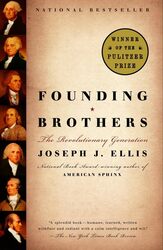
Rating: 7.7/10.
Book split into six parts about various parts of the founding of America and the key personnel involved. Now, the American Revolution is extensively analyzed in retrospect, but at the time, the participants had no idea whether their movement would succeed or what it would become. Historians now disagree on whether to analyze it from the lens of declaring independence from monarchy or of founding a new nation with unique values. Overall, it’s a fairly academic book split into six equal parts, each part about 50 pages focusing on a theme supported by quotes from original sources when available, while still having a well-rounded view of the topic.
The first chapter is on the duel between Hamilton and Burr. They agreed to a duel in 1804, with the result of Hamilton being shot and killed and both political careers ended. Most likely, Hamilton never intended to shoot Burr and missed purposefully, but it’s hard to know for sure. The reason for the duel is that Burr challenged Hamilton after being political enemies for a decade. Hamilton thought of Burr as a self-serving politician of no morals, and this was especially dangerous in a nascent nation where the laws were still being written.
The second chapter is on the Compromise of 1790, an influential dinner gathering in private by Hamilton, Jefferson, and Madison (“the room where it happened”). They agreed to Hamilton’s financial plans, including repaying war bonds with Virginia’s money in exchange for relocating the capital to the south at Washington DC. Such compromises were necessary to prevent endless disagreement that would threaten the stability of the nation.
The next chapter is on the conflicting views on slavery in 1790; at this time the views on slavery were very geographically divided, where the northern states viewed slavery as deeply immoral, while the southern states saw it as necessary and were economically dependent on it. The assumption was it was infeasible to free the slaves and pay the owners with the government’s money. Overall, the founding fathers chose a neutral stance to delay confronting the issue by wording legal text ambiguously and obfuscating specifics, with the view that committing to either side would fracture the nation.
Chapter 4 is about the farewell address written by Washington in 1796 to resign after two terms. It was written by a combination of Hamilton, who wrote most of the words, Madison, and Washington himself, ostensibly to set the precedent of a regular change of power so that the new nation could withstand a leadership transition, but also because Washington was tired of dealing with attacks from opponents like Jefferson, who criticized Jay’s Treaty, which economically aligned America with the British.
Chapter 5 is about the presidency of John Adams, who served as vice president under Washington for several years before beating Jefferson narrowly in the election of 1796 after Washington resigned. He leaned heavily on his politically savvy wife Abigail, while Jefferson relied on Madison for advice. He passed the unpopular Alien and Sedition Acts, making it illegal to criticize the government, and made the unpopular move to make peace with France, which cost him the 1800 election, although the credit for ending the war came too late for him to gain credit.
The final chapter focuses on the friendship between Jefferson and Adams: after Jefferson defeated Adams in the election of 1800, they never spoke to each other for 12 years until their mutual friend Benjamin Rush helped with reconciliation. From 1812, they exchanged over 100 letters to each other full of intellectual debates, where Jefferson accused Adams of retaining the old way of thinking and being more aligned with monarchy, whereas Adams thought of himself as above politics and contemplated the role of individuals in the revolution. They exchanged letters until they died within hours of each other on July 4, 1826, the 50th anniversary of independence.