Rating: 7.4/10.
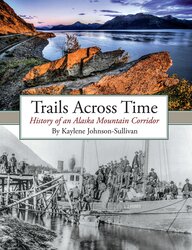
Book about the history of the Kenai Peninsula, especially the route from Anchorage to Seward. It has many pictures, is fairly short at around 100 pages, and includes descriptions of notable people who lived in this area in the past, modern-day road trip information, and other facts from that time.
Prehistory and geography: it lies on a plate boundary, hence there was a large earthquake in 1964, and it is a site of a minor gold rush. Glaciers carved out many valleys and still partially exist. The first people on the peninsula were around 6,000 BC and consisted of natives of two groups: the Sugpiaq/Alutiiq, who mostly hunt in kayaks, and the Dena’ina from the interior, who hunt land animals. The boundaries between tribes are fairly fluid.
James Cook and later George Vancouver in the late 1700s were the first Europeans to survey the region in search of the Northwest Passage, and they discovered Cook Inlet and started fur trading with the natives. The Russians in Alaska started with Bering’s exploration, and they build relations with the natives and trade, although the size of the colony was small relative to the American gold rush; they brought the Orthodox Church to the natives, which continued after the sale to America.
The Kenai Gold Rush was around 1896, and many prospectors traveled to Hope and Sunrise. It was fairly short-lived as the Klondike became the bigger one, but many roads were constructed as a product of the Gold Rush.
Construction of the Alaska Railroad started in 1915 and was completed by 1923, and it brought thousands of workers to the area. Anchorage was set up as a construction camp that would later become the state’s largest city. The Iditarod Trail was a network of foot trails from Seward to Nome, and construction of automobile roads followed these trails and covered the Kenai Peninsula by around 1950. A tunnel to Whittier was blasted in World War II. In the modern day, some communities like Hope and Sunrise have much lower populations than during the Gold Rush, while others like Seward and Kenai have thriving modern economies.