Rating: 8.1/10.
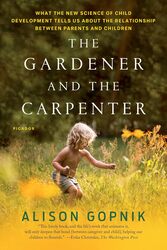
Book about the science of human childhood and parenting, and how modern practices sometimes conflict with the ways that humans evolved, and why the way children behave have deep biological explanations. We should think of the role of a parent as tending to a garden, where you can create conditions but you can’t completely control the outcome. Children differ in their natural temperaments, like being more risk-taking or timid, since both have advantages in different environments, they’re born with a mixture of all types, at least some of us will be suitable for an unknown future.
Childhood is a phase of controlled exploration which has advantages for adulthood when we take what we learned and exploit it. Thus, human children also have a much longer period of development until they are useful than other species. This is so that we are highly adaptable and we can learn new environments, tools, and social structures, rather than just the one that we evolved for. A parallel exists in many animal species: those that mature slowly tend to have a higher learning ability than those who are functional quickly as babies.
Monogamy is nearly universal in humans but fairly unusual among animals, and it likely evolved as a result of babies being needy, where fathers must spend more energy on each child to make sure that they survive. Grandparents also make sense because they’re so useful for childcare. We emotionally see our own children as different from others, similar to romantic partners, while we’re also evolved to cooperate with others to care for children as a community.
Children learn effectively by watching adults and imitating, even better than adults. They can distinguish intent versus doing something accidentally and can improve on actions if they were done inefficiently. They are aware of the skill level of the teacher and which parts the teacher intended to do versus did accidentally.
Children also learn from speech. From a surprisingly young age, they can determine the reliability of claims by adults based on consensus or past reliability, and they can distinguish between real facts versus fictional stories versus religion. They ask a lot of questions to elicit more useful information from adults than just through observation, and they learn to group things into essential categories rather than superficial features.
Children like to play (defined by anything they don’t try to produce something, which would then be work). The process of play allows them to explore objects, and practice simulating situations that could actually happen in real life.
As children enter schooling, their learning becomes more structured and adult-like rather than discovery-based as in early childhood. This requires a higher level of focus on the task while ignoring distractions. Therefore, there is a high rate of ADHD diagnoses among children who are poorly suited for this relatively modern task.
Children have different relationships with technology like the Internet or smartphones than adults do. Rather than novelties, these were things that have always been there, they understand techology and use is more natively. In general, they adapt to change more than adults do – when a world becomes unfamiliar to adults, it is the world that they were born in.
The last chapter is about the philosophical value of children. Arguably, the value is intrinsic and cannot be a rational decision since you do not know the feeling of having a child until you have one; many people dislike other people’s children yet love their own. They require high amounts of time for care, and only recently have parents needed to balance between work and childcare. The need for childcare is in many ways similar to the need to care for one’s own aging parents, eventually either with time or with money.
Overall quite an interesting read about children and parents, with a strong focus on evolutionary biology explanations. The main message is that we shouldn’t worry so much as parents how to do it “correctly” because there’s so much that children do naturally (being encoded in their biology) that adults don’t even realize. Although that does leave open the question of whether there’s anything that parents should do as the role of gardeners to do a better job, which on this point the book does not give much guidance.