Rating: 7.6/10.
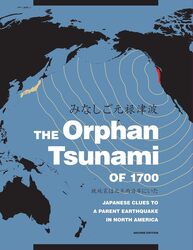
Book about the tsunami of 1700, the largest recorded one in the Cascadia region with a magnitude of about 9.0, focusing on written sources in Japan. Around the 1980s, the potential for earthquakes and tsunamis in the Pacific Northwest region was recognized using geological observations, eg, of trees that were suddenly submerged, creating ghost forests, and human settlements that were buried under tsunami sand, as well as oral stories from indigenous elders (these people were illiterate at the time). The only written primary sources are from Edo Japan, where the earthquake was documented in multiple sources: it caused fairly minor damage but observers were confused by the high waves and tsunami without any earthquake of local origin.
There are six separate written accounts in Kuzushiji, (historical Japanese calligraphy), with each word annotated. Each is fairly brief, just a few sentences, and the book annotates each word with romaji and translation into English, giving a linguistic view of the primary sources. The different accounts focus on different things, and by reconstructing historical calendar and clock systems, researchers are able to pinpoint within the hour when the earthquake must have occurred and how it spread across the Pacific. Through written accounts of where the water reached, they are able to calculate how high the tide was. The methodology must be careful to account for the ground shifting due to the descending Pacific plate (ie, the land is about 1.5m lower now than in 1700). Overall, it is agreed that the tide was probably 3 meters at the highest, which is consistent with a moderate-size tsunami, but the distant origin earthquake was calculated to be around magnitude 9.0.
Another account is from a shipwreck in Edo, Tokyo, where some rice was lost and the ship was damaged. Many of these accounts were carefully documented and signed by witnesses to submit for reimbursement from the state, which is why there is so much comprehensive documentation of a relatively modest natural event that destroyed at most a few dozen houses and killed a handful of people. Examining these sources in the 1980s gave us a better understanding of the sizes of earthquakes to come in the Pacific Northwest region, with around a 10% chance per 50 years, prompting the design of evacuation routes in coastal areas and earthquake resistance for newer buildings. Overall, quite a detailed book about a specific event from multiple angles, with about 100 pages covering history, meteorology, geology, linguistics, and Japanese culture, all intertwined into one topic. The structure of having more diagrams and photos on every page makes it a little like a museum exhibit.